Published on: 09.11.2026 | Interview with: Marcus Popov
Between Denmark and Bulgaria: Identity, Democracy and the Common Good
A conversation with Marcus about Danish and Bulgarian identities, public trust, civil society, corruption and democratic challenges, exploring what the two countries can learn from one another and how their different historical experiences shape contemporary society.
1. You live between Denmark and Bulgaria, both culturally and professionally. How do you describe your own identity when people ask where you’re “from”?
Good question. I remember that it was something I spent a lot of time trying to grasp as a child. I grew up mostly in a Bulgarian household – my mother, who’s from Plovdiv. Throughout my adolescence she had a Middle Eastern partner as well. At the same time, I attended a Danish public school in central Aarhus consisting almost only of ethnic Danes. So, naturally in those years and in that context – also the wider political context with a public cultural war in Denmark in the late 2000s – the question of identity was something I was often confronted with at home and in school.
I ended up with the conclusion that I was neither exclusively Danish nor Bulgarian, but European – it was the easiest way to negotiate sometimes feeling split between home and outside. Now being older, I guess that I would say the same, but with the caveat that the concept of being European has become much more vague, diffuse and complex to me over the years, and that the specific Danish and Bulgarian mental and cultural habits have become clearer to me.
Anyways, the shortest way to answer your question would probably be to say that I’m from Denmark, but also have a Bulgarian passport and roots in Bulgaria: I’m obviously influenced by Danish institutions, such as my education, emphasising some kind of egalitarianism, but in terms of being connected on a deeper level I can’t deny an intimacy with the Bulgarian way of being forthright and immediate, the way of connecting quite easily with new acquaintances – and obviously the Bulgarian humour, which is self-ironic and self-deprecating. Those things are, though, closer to the Danish culture and humour than most would probably think.
2. What are the biggest differences you feel in how ordinary people in Denmark and Bulgaria relate to the state, to institutions, and to the idea of “the common good”?
Really interesting topic, because that’s probably where you see some of the biggest differences between my two countries. It’s often repeated ad nauseam that the Danes have a relationship built on trust. And yes, it might be cliché, but it still holds true in a lot of ways. More specifically, Danish society is built around a civil society of volunteers taking an active part: According to current numbers, 40% of the Danish population are volunteering actively, circa 67% have been at some point in their lives – this includes cultural clubs, sports associations as well as outright political and social causes.
This is a good picture of how the common good is often thought of as something that is shared, needs active (and sometimes too slow-paced) deliberation between the members (i.e. often egalitarian in its shape) and is a question of commitment. Continuing from here, there’s a relatively tight bond between civil society and institutions; Danes in principle have relatively high trust in institutions. However, this needs to be looked at specifically, as scandals within, e.g., the tax system have eroded the trust
Also, it needs to be mentioned, there’s a relatively high level of interaction between lobby organisations and the political parties, as politicians often transition to leading positions here after being parliamentarians in Christiansborg. This gives them and their employers a great advantage, and a large report on the state of Danish democracy, Magtudredningen, recently found that there’s been a tenfold increase of lobbyists in Denmark. They are often working for larger bureaus that help larger organisations in gaining influence in the parliamentary work, and in that way the parliamentary work is at risk of being sidelined.
There’s nothing inherently wrong with lobbyists; the issue is that it’s mostly major companies that have the funds to employ or seek their services, which in turn undermines the interests of smaller players, who might have just as big a right or stake in the matter. As a consequence, it’s a break with the core of the Danish (and in some ways universal) egalitarian principle: Access to influence should not be dependent on access to funds. At the same time, Denmark, as opposed to the EU, does not have any rules on this area and no lobby register, which has been pointed out as a big weakness by organisations such as Transparency International. I’m saying this both to emphasise that things are not all rosy in Denmark, but also to point out that the reason why this is something we take seriously is that – as I mentioned – it is something that breaks with a core principle of access to influence.
I don’t remember the exact numbers on civic participation in Bulgaria, but I remember reading a report comparing Bulgaria with Norway, where the Bulgarian numbers unfortunately were quite low. There are obviously a lot of reasons behind this – brain drain, lack of investment and a shared feeling of having little influence as well as the heritage of forced voluntarism during socialism. Denmark, in this sense, has the privilege of continuity, and no great breaks in its history – besides the German occupation between 1940–45.
This part is interesting for Bulgaria, though, as the country had quite an evolved tradition of worker/farmer cooperatives – I think among the most developed in Europe before WWII. Also, it should be mentioned that Bulgaria in general – like the former peasant country Denmark – also has egalitarian traditions back in history, through i.e. the Orthodox Church, the lack of local nobility as well as the Задруга structure of living in the villages.
In Bulgaria, though, namely through this sense of Задруга (Zadruga), I sense from friends and family that there’s a greater emphasis on the family and closer network and the individual’s role within, whereas “the society” and central institutions are described as something “out there”. In that way, the low trust in the institutions in Bulgaria is replaced with a higher trust in the family and the nearer relations, and thus the common good is often defined more in terms such as taking responsibility for/within your family.
This, in some way, is opposed to the family structures in Denmark: For example, the majority of the elders live alone and are “sent” to retirement homes when they cannot take care of themselves. In this way, the care of them is outsourced, I assume, from a sense of convenience – but probably also respect from their side for their children and grandchildren.
3. Where do you see the deepest social divides in each country, and how do those divides shape people’s opportunities and expectations in daily life?
I’ll try to answer a bit shorter on this, as there are actually some similarities here, and tendencies we see all over Europe: First of all, the financial and economic development of urban areas and the relative decline of rural areas are common, probably all over Europe. Election after election, in Denmark and Bulgaria we do see a larger proportion of rural dwellers voting differently than urban dwellers: Often for parties with an outright sceptical attitude towards the so-called European values and progressive positions. The answer to this is not only economic, but also arises from a lack of inclusion/involvement and an outright experience of being excluded and having to take the negative costs of the course of development.
To concretise this, I can mention that the real estate market in central Copenhagen has been in a massive boom in recent years, prices increasing by 10% yearly, whereas house prices in some areas of Denmark are at the same level as around the financial crisis more than 15 years ago. Real estate prices have become an indicator of a lot of things locally: Level of investment, level of local commerce, influx/outflux.
I know the same is currently happening in Sofia, where rental and real estate prices are increasing as well. In the most recent election, we saw Rumen Radev win on a broad platform gaining votes from a broad range of voter groups – but especially rural dwellers.
I think this cultural and regional conflict will be one of enormous importance in the coming years, as it divides countries by economy, values, politics – and in some places also ethnicity.
4. Danish/Bulgarian economies
I don’t think I have a lot of to comment on here, but will say that the untapped potential of Bulgaria is its youth, which for years have left the country for better opportunities abroad. Completely understandable. But I do hope that at least some of the consequences of what we can assume will be some kind of stability under Rumen Radev, is that Bulgaria will be able to attract its younger generation to stay.
5. Corruption in Denmark and Bulgaria
In Bulgaria, corruption appears to be a very mundane phenomenon covering everything from paying a policeman not to give you a ticket to paying the council administration to give you a permit to build an extra floor in your building. In Denmark, corruption like this is not that widespread: It’s evidently there – as it is in all societies – there’s no question about it, but it is less prevalent and it’s probably more structured through influence-making in specific lobby organisations.
The few cases we have seen in Denmark point towards this highly structured way of exerting influence: A more recent case is our current foreign minister and former prime minister, Lars Løkke’s son, Bergur Løkke Rasmussen. Lars Løkke himself has been in several scandals of abusing party and organisations’ funds for private use, but has in some way always managed to come back. Anyways, his son Bergur, who’s a local politician and member of his father’s party, was recently employed as a consultant by British arms producer, Babcock, who are looking to make a big deal on 30–40 billion DKK of frigates to the Danish navy.
Bergur Løkke was given special responsibility for liaising with the Danish government – the same government where his father is a foreign minister. This obviously created a great scandal, and fortunately it was brought to light, and Bergur Løkke stopped working with Babcock. However, Bergur Løkke also works for several other lobby organisations in the country, such as the Danish CCS (Carbon Capture & Storage Europe), where his personal relations are also of use.
I mean, this is not outright corruption, obviously, but it’s nepotism and a grey area in which the personal and professional mix, which potentially challenges the democratic and professional deliberation process behind large decisions. Considering that this potential deal with Babcock was going to be the biggest defence investment in Danish history, it would be critical if influence could be bought professionally in this way. It’s indicative of a growing political class in Denmark and of some weaknesses that we as a public should be aware of.
6. Democracy in Bulgaria
It’s on the brink, I’d say: Corruption and political influence in the judiciary for over three and a half decades now, voter buying (which fortunately the interim government managed to combat at the last election) and an extremely low level of participation, less than 40%, have become the norm.
At least the country is out of the continuous election cycle it’s been in recent years. Stability is necessary, and when I speak with people in the country, they remind me that interim governments have had a very narrow mandate. For this reason, a lot of decisions have been postponed, and the management of the country has stalled. So, naturally, there’s a sense that it’s good for democracy – and the trust in the institutions – that the country has gotten a democratically elected government, which looks to be able to rule for the coming four years. But what’s the price? We all remember the demonstrations in 2020–2021 and again in the winter of 2025–26: A reform of the judiciary and the combating of corruption in the country. I’m not entirely sure that the outcome of the Radev government will end up satisfying these calls.
I’m also not entirely sure how to transfer the Danish practices to Bulgaria, because things like these are also the result of specific historical, political and cultural developments. But the most important and feasible thing to do would be to start with engaging the wider society in politics, to create organisations that work around a cause or attempt to create a sense of community – and with that also create a long-term infrastructure. Often, we see – and this is a general tendency in the West – that people only engage themselves for a short moment of time in bigger social causes. What’s needed in Bulgaria is the creation of long-term commitment, which in time can create a pressure so big that it’s able to hold the politicians accountable – organisations such as Anti-Corruption Fund or Bird.bg are doing a great job in this respect, I think the next step would be to create larger alliances outside of the closed networks in e.g. Sofia.
I’ve been following the work of Pavel Nachev and Пловдив - Град за хората (Plovdiv – Grad za horata) for a few years. And I think their approach is quite promising. They’ve managed to activate the local пловдивчани in a wide range of causes and at the same time call for greater transparency in the local administration. There are some pretty interesting and relevant organisations working namely with deliberation and citizens’ assemblies. It could be interesting to see them working with local cases like these in Bulgaria.
7. Cooperation between Bulgarian and Denmark
There’s obviously some cooperation in the field of commerce, but I think the established EU countries should also think wider and try to strengthen the connections with the CEE countries in the EU. As mentioned above, some kind of cooperation between Danish civil society actors working with engagement, deliberation and holding the decision-makers accountable would be fruitful. I’m not entirely sure that the Danish know-how can be implemented on a 1:1 basis, but there’s a potential here.
8. What do Danes/Bulgarians get wrong?
Danes often have very little knowledge of Bulgaria, they sometimes even mistake it for Hungary, or if they do know about Bulgaria, it’s often related to Russia or the language being “like Russian”. Both things are a bit off, and I think the Danes I’ve brought to Bulgaria have been surprised by the South European lifestyle of Bulgaria and the wider Balkans. So, yeah, I guess most people think of Bulgaria and the Balkans in a kind of grey панелка (panelka) kind of setting with a high level of crime/poverty. Again, after bringing people to the country, it’s changed their impression completely.
I do think that both Bulgarians and Danes have a tendency to think of each other as being cold, but none are: They are both reserved, but extremely open, once you get to know each other.
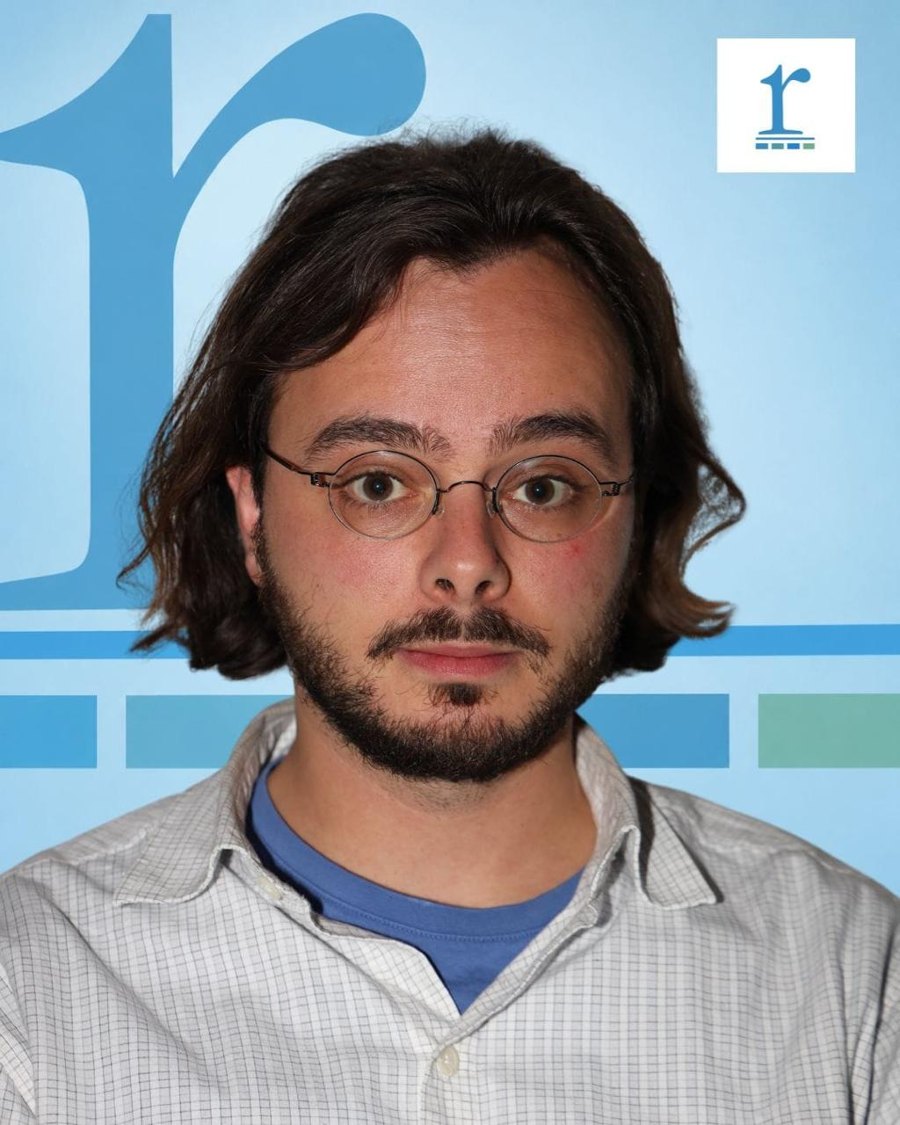
Marcus is a trained historian of ideas from Aarhus University, with additional studies in literary studies and modern culture at the University of Copenhagen, as well as an exchange semester at the University of Turin. He works at the Democracy in Europe Organisation (DEO), where he develops and coordinates information projects covering the European Union and the wider European continent, with a particular focus on the Balkans.
His professional and academic interests include memory politics, historical narratives, the transition to capitalism, geopolitics, anti-corruption and literature. Of Bulgarian descent, Marcus is also Editor-in-Chief of Magasinet rØST, a publication covering culture, politics and society in Eastern Europe. His work focuses particularly on communicating political and social developments in the candidate and member countries of the Western Balkans.
The questions were posed by Dr. Dimitar Keranov.